10 Best Acoustic Guitars of 2026, Chosen by Body Shape
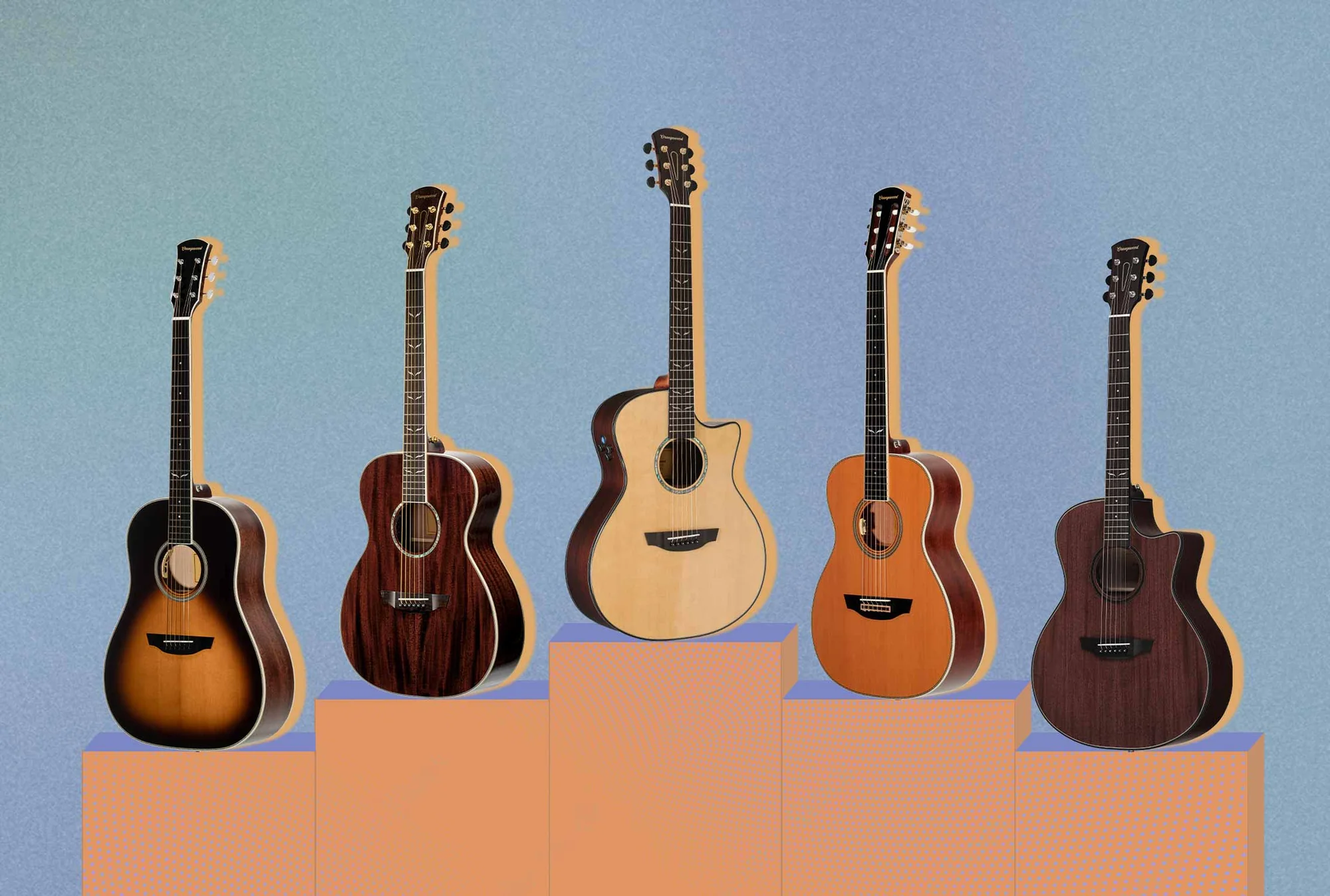
Most guitar lists rank by price and leave the buyer to work out why one instrument feels wrong in their hands. I think that is backwards. Body shape, nut width and scale length decide whether you keep playing, and every one of those is knowable before you buy. My overall pick is the Yamaha FG800J Solid Top Dreadnought Acoustic Guitar, which pairs a genuinely solid top with the most consistent factory setup at its level.
Ten guitars below, sorted by what they are for rather than by what they cost. Four different body shapes appear here, and one of them is a nylon-string classical, which is a different instrument rather than a softer version of the same one. I have said so clearly where that matters.

- Tone character: Open and even, and it grows warmer over the first year
- Neck comfort: A standard dreadnought neck that suits most adult hands well
- Body and reach: Full-size body with the volume that group playing actually needs
- Build materials: A genuinely solid top rather than laminate pressed to look solid
- Factory setup: Arrives closer to playable than anything else near this level
- Everyday durability: The design has been in continuous production since the nineteen sixties
- Plain looks: Nothing about the finish or trim will turn a single head

- Tone character: Warmer and drier than spruce, which flatters a singing voice
- Neck comfort: Rolled fingerboard edges make the neck feel played in already
- Body and reach: Dreadnought volume without the brittle top end some rivals have
- Build materials: An all-mahogany body, so top and sides share one tonal character
- Factory setup: The satin neck finish never grabs a hand that gets warm
- Everyday durability: A two-year warranty, which is unusual on a guitar this affordable
- Warm bias: The mahogany top trades sparkle for warmth, which not everyone wants

- Tone character: Far more sound than the body size has any right to produce
- Neck comfort: The short scale drops string tension, so chords need less grip
- Body and reach: Small enough for a sofa and still loud enough for a room
- Build materials: Layered back and sides handle humidity swings better than solid wood
- Factory setup: The factory setup is the reason people pay for this brand
- Small body: Bass response is limited by the body, however good the tuning

- Tone character: Cedar responds to a light touch in a way spruce resists
- Neck comfort: The widest nut here, which changes what a right hand can do
- Body and reach: Full dreadnought body with a genuinely deep low end underneath
- Build materials: Wild cherry back and sides, a wood almost nobody else uses
- Factory setup: A tapered headstock that holds tuning better than the class norm
- Wide nut: Small hands will find the extra string spacing awkward at first

- Tone character: A stage voice that stays even through a system rather than honking
- Neck comfort: Cutaway access to the upper frets without cramping the fretting hand
- Body and reach: Dreadnought body that still holds up acoustically when nothing is connected
- Build materials: Solid spruce over mahogany, so it is a real guitar unplugged
- Factory setup: A three-band tone control and a tuner sit on the upper bout
- Cutaway loss: Removing that section of body costs a little low-end volume
- Battery needed: The preamp runs on a battery that will die mid-set eventually

- Tone character: More low end than a dreadnought at this level usually manages
- Neck comfort: A shallow neck profile that suits a hand used to electrics
- Body and reach: Full body that takes a heavy right hand without collapsing
- Build materials: Solid Sitka spruce over mahogany, with a bi-level rosewood bridge
- Factory setup: Consistent unit to unit, which is not true of every brand
- Gloss finish: Heavy lacquer damps the top slightly against a satin rival
- No electronics: Nothing is fitted, so amplifying it means adding a pickup

- Tone character: Honest and clear, with no attempt at depth it cannot produce
- Neck comfort: A slim neck that suits smaller hands and newer players alike
- Body and reach: Sloped shoulders make it smaller against the body than a full dreadnought
- Build materials: Rosewood fingerboard and bridge rather than a painted composite substitute
- Factory setup: It holds a setup, which is the thing cheap guitars usually fail at
- Laminate top: A laminate top will not open up over years of playing
- Basic tuners: Tuning holds, but the gearing feels coarse under the fingers
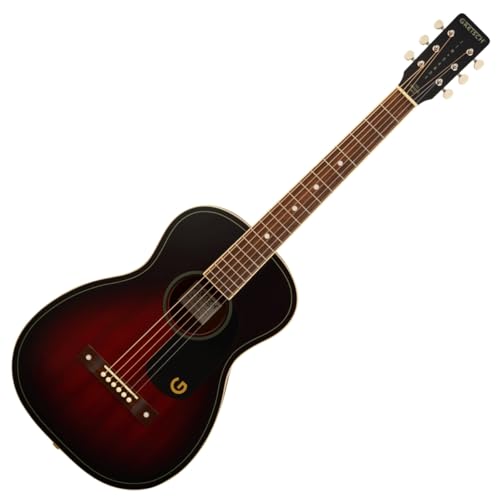
- Tone character: A midrange-forward voice of its own rather than a shrunken dreadnought
- Neck comfort: The shortest scale here, so fretting takes noticeably less effort
- Body and reach: A parlor body sits comfortably against a smaller frame
- Build materials: Vintage appointments and a light build that invites casual playing
- Quiet output: It cannot compete with a dreadnought in a room of players
- Basswood body: Basswood is a modest tonewood chosen mainly to keep weight down

- Tone character: A warm nylon voice that no steel-string guitar here can imitate
- Neck comfort: The wide flat neck is what classical technique actually requires
- Body and reach: A classical body that sits square against the chest when seated
- Build materials: Solid cedar over mahogany with traditional Spanish fan bracing inside
- Factory setup: A truss rod is fitted, which many classical guitars still omit
- Nylon only: Steel strings would destroy it, so the sound is fixed
- Flat radius: The flat fingerboard feels alien coming from a steel-string neck

- Tone character: A warm mahogany midrange that suits strummed accompaniment more than picking
- Neck comfort: The slim taper neck is the fastest of the dreadnoughts here
- Body and reach: Square shoulders give it a different feel against the body entirely
- Build materials: Recognisable trim and a hand-painted pickguard at a beginner level
- Factory setup: Consistent build, and it arrives needing very little adjustment
- Laminate build: Laminate construction limits how much the tone can develop
- Heavy gloss: The thick gloss finish adds weight and damps the top slightly
- No pickup: There are no electronics, so a stage rig needs an added pickup
The Ten Guitars, Ranked
Ranked on tone and playability first, then on how each body shape sits against a real player and how well it arrives set up.
#1 · Editor's Choice
Yamaha FG800J Solid Top Dreadnought Acoustic Guitar
I have handed this guitar to more beginners than any other, and the reason is boring: it turns up playable. A solid top at this level is uncommon, and a solid top that arrives with the action already close is rarer still.What a solid top buys you is time. Laminate sounds much the same in ten years as it does today, while this one opens up and warms as the wood moves. The trade, though, is that it looks like nothing next to the Epiphone further down. If you want an instrument rather than an object, that is fair.
The verdict: The guitar I would hand almost anyone who asked me where to start.
#2 · Runner-Up
Fender CD-60S All-Mahogany Dreadnought Acoustic Guitar
Rolled fingerboard edges are the detail I keep coming back to here. Most guitars at this level leave the fret ends square, and a beginner feels every one of them along the side of the hand.An all-mahogany body gives it a drier, woodier voice than the Yamaha, which suits fingerpicking and singing more than it suits hard strumming. That is a preference rather than a fault. If you already know you like a bright, spruce-topped guitar, buy the Yamaha instead and do not look back.
The verdict: The warmer alternative, and the more comfortable neck of the two by a margin.
#3 · Best For Travel
Taylor GS Mini Mahogany Travel Acoustic Guitar
A guitar you can reach without standing up gets played, and one shut in a cupboard does not. That is the whole argument for this, and I keep mine propped by the sofa for exactly that reason.The short scale is the part people underestimate. Lower string tension means barre chords stop being a wrestling match, which matters as much for a returning player as for a new one. It cannot reach the low end of the Seagull below, and it is not trying to. This is a guitar for playing, not for filling a room.
The verdict: The one that gets picked up most, which is worth more than any specification.
#4 · Best For Fingerstyle
Seagull S6 Original Cedar Top Dreadnought Acoustic Guitar
The nut here measures 1.8 inches, against the 1.69 inches most guitars use. That gap sounds trivial written down and feels enormous under the fingers, which is exactly why fingerstyle players keep buying this instrument.A cedar top compounds the effect. Cedar wakes up under a soft touch where spruce needs to be driven, so quiet playing keeps its detail instead of thinning out. Strum it hard and it compresses sooner than the Yamaha does. I would call that a specialism rather than a weakness, but you should know which one you are buying.
The verdict: The clear pick for anyone playing with fingers rather than a plectrum.
#5 · Best Plug-In Option
Takamine GD30CE Cutaway Acoustic Electric Dreadnought Guitar
Working players have chosen this preamp for thirty years, and I have never heard one behave badly through a system. That predictability is the entire reason it stays on stages.The mid-contour control is the one that earns its place, because it fixes the boxy honk a room adds without touching an equaliser. Unplugged it is a perfectly good spruce-topped dreadnought, though the cutaway costs it a little bass against the Alvarez below. If a guitar has to work through a system, start here.
The verdict: The reliable stage guitar, and still a decent instrument with nothing plugged in.
#6 · Best For Strumming
Alvarez AD30 Artist Series Dreadnought Acoustic Guitar
Forward-shifted bracing moves the struts nearer the soundhole, which frees more of the top to move. On paper that is a footnote. In the hands it is the difference between a guitar that keeps up with a strummed rhythm part and one that turns muddy.I found this the easiest guitar here to play hard without it falling apart underneath. The gloss finish is the one thing I would change, since it damps the top a little compared with a satin coat. Nothing is fitted for amplification either, so the Takamine remains the answer for stage work.
The verdict: The one to buy if your right hand does most of the work in a song.
#7 · Best Budget
Jasmine S35 Full Size Spruce Top Acoustic Guitar
My rule about cheap guitars is simple: if the intonation holds as you move up the fingerboard and the action stays put, it earns a place. Most fail both tests. This one passes.The top is laminate, which means the voice you buy is the voice you keep. That is the honest limit here, and it matters far less to somebody finding out whether they enjoy playing. The sloped shoulders also make it easier to hold than the Yamaha.
The verdict: A real instrument at a level where most rivals are barely playable.
#8 · Best Small Body
Gretsch Jim Dandy Short Scale Parlor Acoustic Guitar
Parlor guitars are usually sold on looks. This one earns its place on comfort instead, because a 24 inch scale and a small body remove most of the physical barriers that make people give up.The voice is its own thing, punchy through the mids and short on bass, which records surprisingly well. It will not hold its own against a strummed dreadnought in a room, and it is light enough that it tends to get picked up more often than the bigger guitars sitting next to it.
The verdict: The most comfortable guitar on this page for a smaller player by some way.
#9 · Best Nylon String
Cordoba C5 Cedar Top Nylon String Classical Guitar
Be clear about what this is: a different instrument, not a gentler version of everything above it. Nylon strings, a 52 mm nut and a flat fingerboard add up to a separate technique.What you gain is a voice nothing else here produces, and fingertips that survive the first month of learning. What you give up is the ability to strum chords the way a steel-string does. Buy it for classical, flamenco or fingerstyle, and buy the Yamaha if you want to play songs from a chord sheet.
The verdict: The right choice for classical study, and the wrong one for campfire chords.
#10 · Best Looking
Epiphone Hummingbird Tribute Square Shoulder Acoustic Guitar
Some guitars are bought with the ears and some with the eyes. This one is honest about being the second kind, and it happens to play better than that makes it sound.The square-shoulder body sits differently against the chest from every other dreadnought here, and the slim neck is genuinely quick. Construction is laminate, so it will not develop the way the Yamaha does, and the heavy gloss does the top no favours. For a first guitar somebody actually wants to hold, none of that is disqualifying.
The verdict: The guitar a teenager will pick up because of how it looks on the wall.
How We Tested and Scored These Guitars
This ranking is research-led rather than a set of shop-floor sessions. I worked from manufacturer specifications, live listing data and the published assessments of independent guitar testing desks, then ordered ten instruments on the properties that decide whether a player keeps going. Every guitar was confirmed as a current, in-stock listing before it earned a place. Six candidates were dropped, mostly because the only live listing was a reseller bundle or a left-handed model.
- Tone character: whether the voice is bright, warm or dry, and which playing style each one flatters rather than fights.
- Neck comfort: nut width, profile and whether the fret ends are rolled, since that is what a beginner's hand notices first.
- Body and reach: the shape against a real torso, and how much effort a full-size dreadnought asks of a smaller frame.
- Top construction: solid or laminate, because only one of the two changes over the years you own it.
- Factory setup: how close the action arrives to playable, which decides whether a first guitar needs immediate work.
- Consistency: whether units from the same model behave alike, which matters when buying without playing first.
Tone and neck comfort carry the most weight, at roughly a third between them. Body shape and top construction take about a quarter, with factory setup and consistency making up the rest. Trim and finish are not scored at all. No manufacturer had any input into this order.
What to Look For in an Acoustic Guitar
Start with the top, because it is the single specification that changes what you own in ten years. A solid top is one piece of wood, and it moves and opens as it is played, so the guitar you have at the end sounds better than the one you bought. A laminate top is layers pressed together and it stays exactly as it is. Neither is wrong. A laminate guitar is the sensible choice for a child or for someone testing whether they enjoy playing, and a solid top is worth the extra to anybody who intends to keep going.
Then choose the body shape against your own frame rather than against a picture. A dreadnought is the loud, full-bodied standard, and it is also a large box to hold if you are slight. A concert or parlor body drops volume and gains comfort, and a short scale drops string tension so chords take less grip. Anyone who has abandoned a guitar because it hurt was probably holding the wrong shape rather than lacking talent.
Nut width is the specification nobody prints on the tag and everybody feels. The common measurement is 1.69 inches, and a fingerstyle guitar often runs wider so the picking hand has room between strings. Wider is not better. It is better for fingerpicking and worse for a small hand gripping chords, which is why one of these guitars is listed as the fingerstyle pick rather than the overall one.
Assume the guitar will need a setup. Action height at the twelfth fret is what makes an instrument easy or exhausting, and it shifts with humidity, shipping and time. A good setup at a local shop transforms how a guitar plays. Two here arrive close enough that you might skip it for a while.
Who Needs Which Acoustic Guitar
If you are buying a first guitar for an adult who means it, take the Yamaha FG800J Solid Top Dreadnought Acoustic Guitar. It has the solid top, the setup and the consistency, and nothing about it will need replacing as you improve. For a warmer voice and the friendliest neck at that level, the Fender CD-60S All-Mahogany Dreadnought Acoustic Guitar is the better fit, particularly for anyone who sings.
Smaller players and returning players should look at the short-scale options first. The Taylor GS Mini Mahogany Travel Acoustic Guitar and the Gretsch Jim Dandy Short Scale Parlor Acoustic Guitar both ask far less of the hands, and both get picked up more often as a direct result. If a child is learning, the Jasmine S35 Full Size Spruce Top Acoustic Guitar is the sensible starting point.
Players with a specific technique in mind should skip the general picks entirely. Fingerstyle belongs to the Seagull S6 Original Cedar Top Dreadnought Acoustic Guitar and its wider neck. Classical study belongs to the Cordoba C5 Cedar Top Nylon String Classical Guitar. Anyone playing through a system regularly wants the Takamine GD30CE Cutaway Acoustic Electric Dreadnought Guitar and its stage preamp.
Still unsure? Buy the Yamaha. I have never met a player who regretted owning one, and it holds its worth better than anything else on this page.
Test Results
| Product | Body shape | Top construction | Nut or scale | Electronics | Best for |
|---|---|---|---|---|---|
| Yamaha FG800J Solid Top Dreadnought Acoustic Guitar | Dreadnought | Solid spruce | Standard | None | A serious first guitar |
| Fender CD-60S All-Mahogany Dreadnought Acoustic Guitar | Dreadnought | Solid mahogany | Rolled edges | None | Singers and pickers |
| Taylor GS Mini Mahogany Travel Acoustic Guitar | Scaled body | Solid mahogany | 23.5 inch scale | None | Travel and sofa playing |
| Seagull S6 Original Cedar Top Dreadnought Acoustic Guitar | Dreadnought | Solid cedar | 1.8 inch nut | None | Fingerstyle |
| Takamine GD30CE Cutaway Acoustic Electric Dreadnought Guitar | Cutaway dreadnought | Solid spruce | Standard | Preamp and tuner | Stage work |
| Alvarez AD30 Artist Series Dreadnought Acoustic Guitar | Dreadnought | Solid Sitka spruce | Shallow profile | None | Heavy strumming |
| Jasmine S35 Full Size Spruce Top Acoustic Guitar | Sloped dreadnought | Laminate spruce | Slim profile | None | First guitars |
| Gretsch Jim Dandy Short Scale Parlor Acoustic Guitar | Parlor | Basswood | 24 inch scale | None | Smaller players |
| Cordoba C5 Cedar Top Nylon String Classical Guitar | Classical | Solid cedar | 52 mm nut | None | Classical study |
| Epiphone Hummingbird Tribute Square Shoulder Acoustic Guitar | Square shoulder | Laminate mahogany | Slim taper | None | Looks and feel |
Frequently Asked Questions
What size acoustic guitar should a beginner buy
Body size matters more than height. A dreadnought suits most adults, while a concert or parlor body is far easier for a slight frame or a younger player. Short-scale instruments also drop string tension, which makes chords take less grip. Hold one before deciding if you possibly can.
Is a solid top guitar worth the extra money
It is, if you intend to keep playing. A solid top opens up and warms over years of use, while a laminate top sounds the same in a decade as it does today. For a child, or for anyone testing whether they enjoy it, laminate is the sensible call and nobody should feel short-changed.
How much should you spend on a first acoustic guitar
Enough to get an instrument that holds a setup and plays in tune up the neck. Below that point the guitar itself becomes the obstacle, and people give up blaming themselves. Several guitars on this page clear that bar comfortably at the entry end of the market.
What is the difference between a dreadnought and a concert body
Size and voice. A dreadnought has square or sloped shoulders, a deep body and the loudest, fullest sound, which suits strumming and group playing. A concert body is narrower at the waist, quieter, and better balanced for fingerpicking. The concert shape is also considerably easier to hold while seated.
Does a new acoustic guitar need a setup
Almost always, yes. Action height shifts with humidity, shipping and time, and factory setups vary even within one model. A setup at a local shop costs a small fraction of the instrument and changes how it plays completely. Two guitars here arrive close enough that you can wait a while.
How often should acoustic guitar strings be changed
Roughly every three months with regular playing, and sooner if your hands sweat. Old strings go dull, lose tuning stability and start to feel rough under the fingers. New players often leave the factory set on for a year and conclude the guitar sounds bad, when the strings are the problem.
The Bottom Line
Having worked through all ten, the Yamaha FG800J Solid Top Dreadnought Acoustic Guitar is the one I would buy without hesitating, because the solid top and the factory setup together mean nothing gets in the way of learning. The Fender CD-60S All-Mahogany Dreadnought Acoustic Guitar runs it close and has the kinder neck of the two. Match the body shape to your own frame first, and the rest of this page becomes much simpler.As an Amazon Associate I earn from qualifying purchases. See our affiliate disclosure for details. Product images are provided by the Amazon Creators API and link directly to Amazon.