10 Best Gaming Consoles of 2026, Ranked on What You Can Buy
Most console guides compare three machines and stop. That misses the two classes that have taken over since, and it ignores which consoles you can actually buy without paying a reseller a premium. Half the obvious answers fail that test. My overall pick is the Nintendo Switch 2 Handheld And Docked Gaming Console, the only current machine that works in the hand and on a television.
Ten consoles below, drawn from four different classes: two home machines, two handheld PCs, four handhelds built around older libraries, and one box that plugs straight into a television. Each review says which class it belongs to, because that decision matters far more than any specification underneath it.
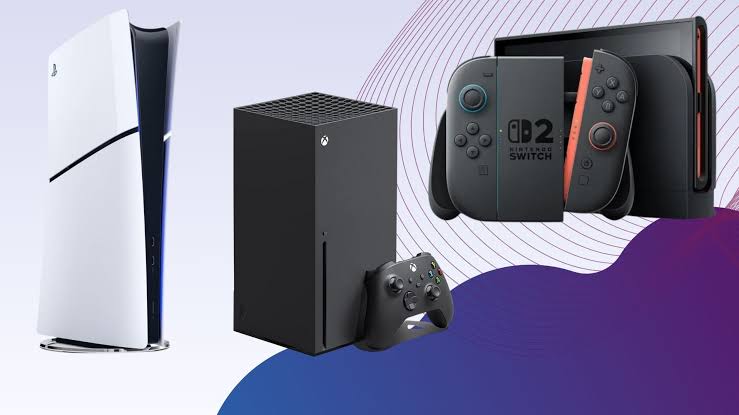

- Game library: The deepest first-party library of any machine listed on this page
- Setup effort: Out of the box and into a game faster than any home console here
- Everyday handling: One machine covers a train, a sofa and a television without compromise
- Control feel: Magnetic controllers detach cleanly and double as pointing devices
- Screen or output: A 7.9 inch 1080p screen in the hand, and up to 4K when docked
- Back catalogue: Plays the vast majority of the original Switch catalogue directly
- Raw power: The weakest graphics hardware of the three home consoles here

- Game library: The strongest run of single-player exclusive games in the category
- Setup effort: Plug in, sign in once, and the interface stays out of the way
- Everyday handling: A quiet box that disappears into a television cabinet easily enough
- Control feel: The DualSense triggers push back, which no rival controller does
- Screen or output: 4K output with 120Hz support on a television that can take it
- Back catalogue: Plays the great majority of the previous generation's catalogue
- No portability: It never leaves the television, so there is no handheld option

- Game library: A subscription library that is enormous, and cheaper than buying games
- Setup effort: Quick Resume means several games sit suspended and ready at once
- Everyday handling: The largest of the home boxes, so it needs real shelf clearance
- Control feel: The controller is the most conventional and comfortable shape here
- Screen or output: 4K output with 120Hz support and variable refresh rate handling
- Storage cost: Expanding storage needs a proprietary card rather than any drive

- Game library: Every storefront you already own games on, gathered into one library
- Setup effort: It boots into a console interface rather than dropping you at a desktop
- Everyday handling: Contoured grips that suit an hour of play rather than ten minutes
- Control feel: A full-size controller layout wrapped around a handheld screen
- Screen or output: A 7 inch 1080p screen at 120Hz with a touch layer over it
- Battery drain: A demanding game empties the battery far faster than a console does

- Game library: The same PC library, on the sharpest and largest screen in this list
- Setup effort: A kickstand and detachable pads mean it sets up on a tray table
- Everyday handling: Noticeably heavier than the rest, which you feel after an hour
- Control feel: The right-hand controller works as a mouse for strategy games
- Screen or output: An 8.8 inch 2560 by 1600 panel running at up to 144Hz
- Weight: The heaviest handheld here, and long sessions make that obvious
- Desktop leaks: You still meet the desktop more often than on the pick above
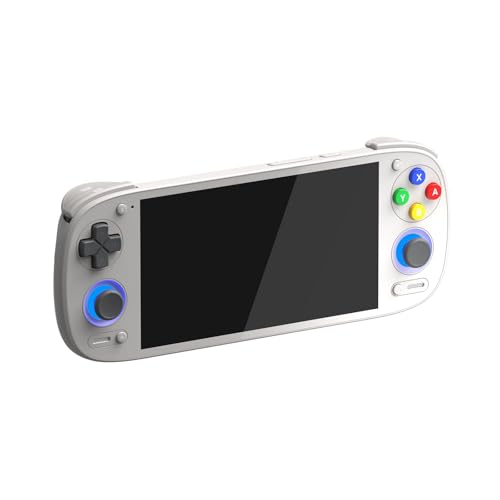
- Game library: Comfortably runs libraries up to the sixth generation of consoles
- Setup effort: Android means store and streaming apps sit alongside everything else
- Everyday handling: Small enough for a coat pocket, unlike either handheld PC above
- Control feel: Hall-effect sticks, so drift never develops however hard they are used
- Screen or output: A 5.5 inch 1080p OLED panel with genuinely black blacks
- Chip age: The processor is a previous flagship rather than a current one
- Setup work: You supply and organise the game files yourself, which takes time

- Game library: The most capable Android handheld here, and it reaches further than most
- Setup effort: Android again, so nothing about the software is unfamiliar or fragile
- Everyday handling: An 8000mAh battery, the largest capacity of any handheld on this page
- Control feel: Hall-effect sticks and triggers, so nothing wears into vagueness
- Bulk: A 7 inch handheld is too large for any pocket worth the name
- Brand support: A small maker, so long-term firmware support is less certain

- Game library: Every game is properly licensed, so nothing has to be sourced privately
- Setup effort: Switch it on and play, with no files to find and no folders to organise
- Everyday handling: Solid enough to hand to a child without worrying about it
- Control feel: Chunky physical controls that suit the era of games it runs
- Screen or output: A 4.3 inch screen, and it also outputs to a television over one cable
- Small library: The catalogue is a fraction of what an emulation handheld reaches
- Modest screen: The panel is functional rather than sharp by current standards
- No streaming: There is no app support at all, so it does one job only

- Game library: More than two hundred games already on it, with nothing to install
- Setup effort: One cable to the television and it works, with no account or update
- Everyday handling: Small enough to live in a drawer and come out at Christmas
- Control feel: Two wireless controllers included, and it switches control styles
- Old games only: The library stops decades ago, so nothing modern runs here
- No battery: It needs a television and a socket, so it never travels
- Basic pads: The bundled controllers are light and simple rather than precise

- Game library: Handles the two-dimensional era completely, which is most retro playing
- Setup effort: Community firmware is well documented, though you do the work yourself
- Everyday handling: It genuinely fits a shirt pocket, which nothing else here manages
- Control feel: Small controls that suit older layouts rather than modern ones
- Screen or output: A 3.5 inch 640 by 480 screen, sharp for the games it runs
- Tiny screen: A 3.5 inch panel is limiting for anything beyond older games
- No TV out: It cannot connect to a television, so it stays a handheld
The Ten Consoles, Ranked
Ranked on library strength and how little stands between the box and a game, then on how each one handles day to day.
#1 · Editor's Choice
Nintendo Switch 2 Handheld And Docked Gaming Console
I keep coming back to a boring practical point. This is the only console on the page that answers both questions at once, so nobody has to decide between a machine for the living room and a machine for a flight.The magnetic controllers are a genuine improvement over the old rails, and they attach without the alignment fiddle the first generation demanded. It is the least powerful of the three home machines, though, and a cross-platform game will look sharper on the PlayStation below. The library is what settles it.
The verdict: The most useful console here, and the one I would buy for a household of mixed ages.
#2 · Runner-Up
Sony PlayStation 5 Slim Disc Edition Console
Load a first-party game here and the argument makes itself within about ten minutes. Nothing else on this page has a comparable run of big single-player releases, and that is what most people are actually buying.The resistive triggers are the detail I would miss most going back, because tension in a bowstring reads through your fingers rather than as a rumble. A disc drive keeps second-hand games available. It is a living room machine and nothing else, which the Switch above is not.
The verdict: Buy this for the exclusives and a television worth pointing it at.
#3 · Best For Subscriptions
Microsoft Xbox Series X 1TB Gaming Console
The economics here are different from everything else on the page. A subscription puts a very large catalogue in front of you for a monthly figure, which changes the arithmetic completely if you play widely rather than deeply.Quick Resume is the feature I did not expect to care about and now look for everywhere. Several games stay suspended, and switching takes seconds rather than a full load. Backwards compatibility reaches back four generations. Storage expansion is the sore point, since it takes a proprietary card.
The verdict: The cheapest way to play a lot of different games rather than a few.
#4 · Best Handheld PC
Asus ROG Xbox Ally Handheld Gaming Console
Handheld PCs used to fail for one reason. You turned them on and a desktop appeared, and suddenly you were managing a computer rather than playing a game. This one boots into a full-screen console interface instead, which is the whole reason it sits above the Legion Go.Pulling installed games from several storefronts into one list removes the other daily annoyance, and the grips are moulded rather than flat. Battery is the honest cost of the class: a demanding game drains it in a fraction of the time a console would.
The verdict: The handheld PC I would recommend to somebody who wants a console, not a computer.
#5 · Biggest Handheld Screen
Lenovo Legion Go 8.8 Inch Handheld Gaming Console
Strategy games are the reason this one exists. The right controller detaches and works as a mouse, so a management game or a builder becomes genuinely playable on a handheld, which is not true anywhere else on this page.The panel is the other draw, larger and sharper than the Xbox-branded handheld above. Two costs come with it: the weight, which you notice after an hour, and software that drops you into a desktop more often.
The verdict: The one to pick if strategy games or screen size decide the purchase.
#6 · Best Android Handheld
Retroid Pocket 5 Android Handheld Game Console
Hall-effect sticks are the specification I check first on any handheld now. Conventional sticks develop drift within a couple of years, and magnetic ones do not, which is the difference between a device you keep and one you replace.The OLED panel is a real one rather than a bright LCD, and older games with dark scenes benefit enormously. The processor is a previous flagship, so the most demanding emulation is out of reach. You also do all the library work yourself, which the Evercade further down deliberately avoids.
The verdict: The sweet spot for older libraries, provided you enjoy the setting up.
#7 · Best OLED Handheld
Ayn Odin 2 Portal Handheld Game Console
Two numbers explain this one. It has the largest battery of any handheld listed here and the largest OLED panel, and those two facts together make it the machine for a long flight rather than a bus ride.A flagship-class mobile processor pushes emulation further than the Retroid above manages, which is where the extra outlay goes. The trade is size, because a 7 inch handheld does not pocket. The company is small, so firmware support is less certain.
The verdict: The most capable Android handheld here, and the best one for long journeys.
#8 · Best Licensed Retro
Evercade EXP-R Cartridge Retro Handheld Console
Here is the one retro handheld you can buy for a child without a conversation about where the games came from. Every title on it is licensed, and they arrive on physical cartridges you can hold.Eighteen games are built in before a cartridge goes near it. Handing a cartridge to a child also works in a way a folder of files never will. The catalogue is small next to what the Android handhelds reach.
The verdict: The right retro console for a child, and the only fully licensed one here.
#9 · Best Plug And Play
My Arcade Atari Game Station Pro Console
Every other console here wants something from you first. An account, an update, a network, a library. This one wants a television and about a minute, and then two people are playing.Switching between joystick, paddle and trackball styles matters more than it sounds, because these games were built for three different controllers. The library stops a long time ago, there is no battery, and the pads are simple, all of which is the point rather than an oversight.
The verdict: The simplest console on this page, and the easiest one to give as a gift.
#10 · Best Budget
Miyoo Mini Plus Pocket Retro Game Console
Cheap retro handhelds usually feel cheap. This one does not, and a protective case arrives in the box rather than as another purchase, which at this level is close to unheard of.It handles the two-dimensional era completely, which covers most of what people revisit. Anything three-dimensional is out of reach, and it cannot reach a television, so the Atari box above stays the answer for a room. As an everyday carry, nothing here competes.
The verdict: Hard to argue with as a pocket machine you will not worry about damaging.
How We Tested and Scored These Consoles
This ranking is research-led rather than a set of house play sessions. I worked from manufacturer specifications, live listing data and the published measurement work of independent testing desks, then ordered ten consoles on the properties that decide whether the machine gets used. Every console was confirmed as a current, in-stock listing before it earned a place. Twelve candidates were dropped, almost all for the same reason: the only live listing sat far above the price the maker set.
- Library strength: what you can actually play, counting exclusive titles, subscription catalogues and back catalogues separately.
- Setup effort: how much stands between the box and a game, from accounts and updates to sourcing and organising files yourself.
- Everyday handling: size, weight and where the machine lives, since one that does not suit the room stays off.
- Control feel: stick technology, trigger behaviour and whether the layout suits the era of games each console runs.
- Screen or output: panel type and resolution on the handhelds, and television output on everything designed to dock.
- Purchasability: whether it sells at the price its maker set, since a recommendation you cannot buy is not one.
Library strength and setup effort carry the most weight, at roughly a third between them. Handling and control feel take about a quarter, with screen or output and purchasability making up the rest. Raw graphics throughput is not scored on its own, because it predicts almost nothing about whether somebody enjoys a console. No manufacturer had any input into this order.
What to Look For in a Gaming Console
Start by working out which of four classes you are shopping in, because that single decision removes most of this page. A home console plugs into a television and does nothing else. A handheld PC runs a desktop system and plays the library you may already own on a computer. A handheld built around older games needs you to supply most of those games. A plug-and-play box carries a fixed set of old titles and asks nothing at all. People who regret a console purchase have usually bought across class lines without realising it.
Then check what the machine can actually play, and be specific about it. Exclusive games are the reason to choose one home console over another, and they are the only reason. A subscription catalogue changes the arithmetic entirely if you play widely rather than deeply, because a monthly figure covers far more games than buying them individually ever would. Backwards compatibility varies enormously: one machine reaches back four generations, several reach back one, and the retro handhelds need you to supply the files.
Be sceptical about raw hardware figures. Graphics throughput is quoted most and predicts least, because a console is a fixed target developers optimise for over years. The least powerful home console here has the strongest library, which tells you what that specification is worth. Screen technology on a handheld matters more, and an OLED panel is a genuine upgrade.
On the handhelds, check the thumbsticks first. Conventional sticks wear and start registering movement that is not there, usually within a couple of years, and magnetic Hall-effect sticks do not. Two handhelds here have them, and it is the best predictor of how long a device stays usable. Battery capacity is the other figure worth reading.
Finally, check availability before you fall for anything. Several of the most obvious recommendations here are barely sold at the price their makers set, and the listings that exist come from resellers. Every console on this page cleared that test, and twelve candidates did not.
Who Needs Which Gaming Consoles
For a household sharing one machine, the Nintendo Switch 2 Handheld And Docked Gaming Console is the straightforward answer, because it covers the television and the back seat of a car at once. If single-player games on a good television are the point, the Sony PlayStation 5 Slim Disc Edition Console has the stronger catalogue. Anyone who plays widely rather than deeply wants the Microsoft Xbox Series X 1TB Gaming Console and its subscription.
People who already own a large computer game library are in a different market entirely. The Asus ROG Xbox Ally Handheld Gaming Console is the one I would buy, because it behaves like a console rather than a laptop with handles. If strategy and management games are the reason, the Lenovo Legion Go 8.8 Inch Handheld Gaming Console detaches a controller that works as a mouse, and it has the larger screen.
Older libraries split three ways. Enthusiasts who enjoy the setup should take the Retroid Pocket 5 Android Handheld Game Console, or the Ayn Odin 2 Portal Handheld Game Console for longer journeys. Buying for a child, the Evercade EXP-R Cartridge Retro Handheld Console is the only fully licensed option here. For a living room and no patience at all, the My Arcade Atari Game Station Pro Console needs one cable and a minute.
Still undecided? Take the Miyoo Mini Plus Pocket Retro Game Console as a cheap way to find out whether you actually play on the move, before committing to anything larger.
Test Results
| Product | Class | Screen | Television output | Back catalogue | Best for |
|---|---|---|---|---|---|
| Nintendo Switch 2 Handheld And Docked Gaming Console | Hybrid console | 7.9 inch 1080p | Up to 4K docked | Original Switch library | Mixed-age households |
| Sony PlayStation 5 Slim Disc Edition Console | Home console | None | 4K at up to 120Hz | Previous generation | Exclusive games |
| Microsoft Xbox Series X 1TB Gaming Console | Home console | None | 4K at up to 120Hz | Four generations | Subscription gaming |
| Asus ROG Xbox Ally Handheld Gaming Console | Handheld PC | 7 inch 1080p | Docks over one cable | Computer storefronts | A PC library in hand |
| Lenovo Legion Go 8.8 Inch Handheld Gaming Console | Handheld PC | 8.8 inch 2560 by 1600 | Docks over one cable | Computer storefronts | Strategy games |
| Retroid Pocket 5 Android Handheld Game Console | Android handheld | 5.5 inch OLED | No | You supply the files | Sixth-generation games |
| Ayn Odin 2 Portal Handheld Game Console | Android handheld | 7 inch OLED | No | You supply the files | Long journeys |
| Evercade EXP-R Cartridge Retro Handheld Console | Cartridge handheld | 4.3 inch display | Yes, over one cable | Licensed cartridges | Children and gifts |
| My Arcade Atari Game Station Pro Console | Plug and play | None | Yes, over one cable | 200 plus built in | Instant nostalgia |
| Miyoo Mini Plus Pocket Retro Game Console | Pocket handheld | 3.5 inch 640 by 480 | No | You supply the files | Everyday pocket carry |
Frequently Asked Questions
Which gaming console should I buy in 2026
Start with the class rather than the brand. A hybrid machine suits a household that shares one console, a home box suits a dedicated television, and a handheld PC suits somebody who already owns computer games. The Switch at the top of this list is the safest single answer for most people.
What is the difference between a handheld console and a gaming laptop
The interface, mainly, and the shape. A handheld PC runs the same desktop system a laptop does, so it plays the same library, but the good ones boot into a console-style launcher and wrap a full controller around the screen. Battery life is far shorter than a dedicated console manages.
Do I need a 4K television to get the benefit of a home console
No, though two of these consoles are wasted without one. The home machines output 4K and support high refresh rates, and on a 1080p set you lose most of that while still getting shorter load times. If the television is older, the hybrid or handheld picks make more sense.
Is a digital console cheaper to own than a disc console
Usually not, once you count the games. A digital machine costs less upfront and closes off second-hand discs, lending and reselling, which is where the savings on a disc console come from. Two consoles here have a drive fitted, and both are the better long-term choice for that reason.
How long does a gaming console generation usually last
Roughly six to seven years between major hardware launches, with a mid-cycle refresh somewhere in the middle. Support continues for several years after the successor arrives, so buying late in a generation is far less risky than it sounds. The current machines all have years of releases ahead.
Can a new console play games from older systems
Some do, and by very different amounts. One console here reaches back four generations, the hybrid plays the great majority of its predecessor's library, and the PlayStation covers most of the generation before it. The retro handhelds reach back decades, but you supply the games yourself.
The Bottom Line
After working through all ten, the Nintendo Switch 2 Handheld And Docked Gaming Console is the one I would buy first, because it removes the choice between a television machine and a portable one and it is sold at the price Nintendo set. The Sony PlayStation 5 Slim Disc Edition Console is the runner-up and the better answer if exclusive games and a good television are what you care about. Work out which of the four classes you are shopping in, and this page gets much shorter.As an Amazon Associate I earn from qualifying purchases. See our affiliate disclosure for details. Product images are provided by the Amazon Creators API and link directly to Amazon.