10 Best Wireless Earbuds of 2026, Researched & Ranked
Ten sets made this list out of twenty one we assessed, and the Apple AirPods Pro 3 takes the top position. Cancellation has caught up with Bose, five tip sizes including foam mean most ears find a seal, and the hearing test running on the buds themselves is genuinely new. Android owners should read the Samsung entry instead.
Everything below sorts by a specific problem rather than a general score. Loud commutes, narrow ear canals, calls in wind, running, and a tight budget all point at different sets, and none of the ten is the right answer to all five.
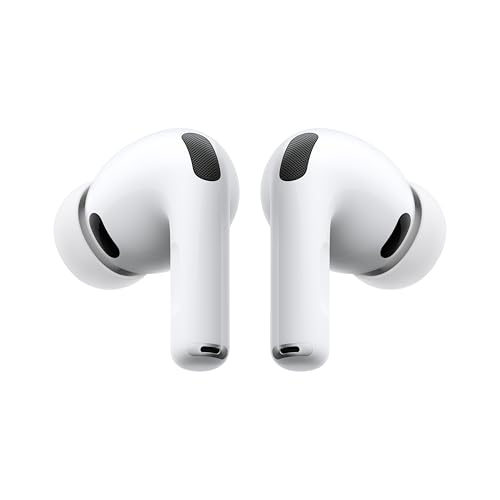
- Everyday fit: Five tip sizes including foam, so most ear canals find a seal
- Cancellation depth: Cancellation now sits close enough to Bose that few would notice
- Tonal balance: Balanced tuning that flatters podcasts and acoustic records equally well
- Playtime per charge: Six hours a charge, with the case topping it up repeatedly
- Sweat resistance: An IP57 rating covers sweat, rain and a brief accidental soaking
- App and extras: A hearing test and a hearing aid mode run on the buds
- Android features: Half the firmware features simply do not work on an Android phone

- Everyday fit: Silicone and foam tips both supplied, and the shells sit shallow
- Cancellation depth: Cancellation is good rather than class leading, and it stays natural
- Tonal balance: The most convincing tonal balance of any earbud on this list
- Playtime per charge: Seven and a half hours a charge, plus twenty two in the case
- Sweat resistance: An IP54 rating handles sweat and rain, though not immersion
- App and extras: A full parametric equaliser and Auracast reception, which is rare
- App learning: The parametric equaliser is powerful and genuinely hard to learn well

- Everyday fit: Stability bands in three sizes keep the shells planted while walking
- Cancellation depth: The deepest cancellation of any earbud here, and audibly so
- Tonal balance: Immersive Audio widens the stage rather than simply thickening the bass
- Playtime per charge: Six hours with cancellation running, which is the trade for that depth
- Sweat resistance: An IPX4 rating covers sweat and rain but nothing beyond that
- Battery per charge: Six hours is the shortest single run of any set here

- Everyday fit: Blade stem design seats more consistently than the previous generation did
- Cancellation depth: Adaptive cancellation reads your surroundings and adjusts without any prompting
- Tonal balance: Planar tweeter and dynamic woofer separate detail from bass cleanly
- Playtime per charge: Six hours with cancellation, and the case carries several full refills
- Sweat resistance: An IP57 rating matches the Apple set for sweat and rain
- Galaxy lock-in: The best features need a recent Galaxy phone to work at all

- Everyday fit: Four tip sizes and a shallow shell that suits smaller ears
- Cancellation depth: Adaptive cancellation that holds up well against sets costing three times more
- Tonal balance: HearID tuning builds a profile from a short in-app hearing check
- Playtime per charge: Ten hours a charge, with forty more waiting inside the case
- Sweat resistance: An IPX4 rating covers gym sweat and a walk in rain
- Bass tuning: The default tuning is heavy-handed until you run HearID once

- Everyday fit: Compact shells with four tip sizes suit ears that reject flagships
- Cancellation depth: Dual-microphone cancellation handles a bus or an open office comfortably
- Tonal balance: Sony house tuning with a fully adjustable equaliser in the app
- Playtime per charge: Twelve hours a charge, the longest single run on this page
- Sweat resistance: An IPX4 rating is enough for sweat and unexpected rain
- Codec support: No LDAC at all, which is a strange omission from Sony
- Cancellation depth: Cancellation is a clear step behind the Bose set here

- Everyday fit: Twist-to-adjust stabiliser holds the shell without pressing the canal
- Cancellation depth: Silent Seal 2.0 measures your ear and tunes the cancellation to it
- Tonal balance: Tensor A1 keeps the tuning stable as the cancellation adapts around you
- Playtime per charge: Eight hours a charge, with twenty two more in the case
- Assistant reliance: Several of the better features assume you use Gemini daily
- Fit range: The stabiliser suits average ears better than very small ones

- Everyday fit: Nickel-titanium ear hooks make these the only set that cannot fall out
- Cancellation depth: Active cancellation with transparency, which the previous generation lacked entirely
- Tonal balance: Warm, bass-forward tuning suited to pace rather than to fine detail
- Playtime per charge: Eight hours a charge, with thirty seven more inside the case
- Sweat resistance: An IPX4 rating survives heavy sweat and a rained-on long run
- Case bulk: Those ear hooks force a case far larger than any rival
- Heart rate use: On-bud heart rate needs a compatible training app to matter
- Sound detail: Detail lags the Sennheiser noticeably on quiet acoustic recordings

- Everyday fit: Small shells and four tip sizes suit the widest range of ears
- Cancellation depth: Hybrid cancellation rated to 45 dB, which is startling at this level
- Tonal balance: An 11 mm dynamic driver with far more low end than expected
- Playtime per charge: Nine and a half hours a charge, plus thirty three in the case
- Sweat resistance: An IP54 rating covers sweat and rain on a daily commute
- Case finish: The transparent case scuffs and yellows within a few months
- Wind handling: Call microphones struggle badly once there is any real wind
- Transparency mode: Transparency sounds thin and processed next to the Apple set
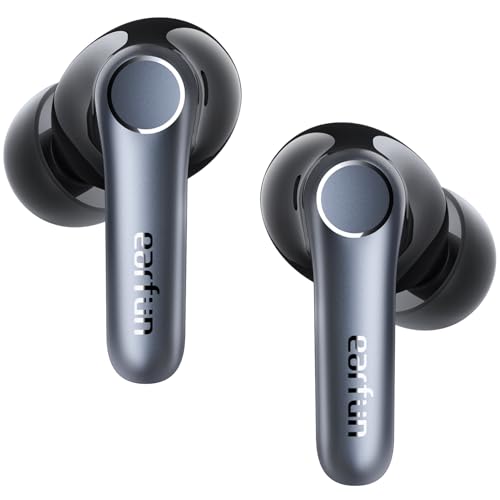
- Everyday fit: The smallest shells here, and the pick for narrow ear canals
- Cancellation depth: Fifty decibels of adaptive hybrid cancellation running across six microphones
- Tonal balance: Tuning leans neutral, with app presets covering most other tastes
- Playtime per charge: Eleven hours a charge, and forty one more in the case
- Sweat resistance: An IPX5 rating is the toughest water rating on this page
- App polish: The companion app is clumsy and slow to connect reliably
- Brand support: Firmware updates arrive less predictably than from the majors
- Transparency mode: Transparency here is usable rather than genuinely convincing in traffic
All Ten Sets in Detail
Ranked by composite score, with the fit, cancellation, battery and codec notes that separated them.
#1 · Editor's Choice
Apple AirPods Pro 3 Noise Cancelling Wireless Earbuds
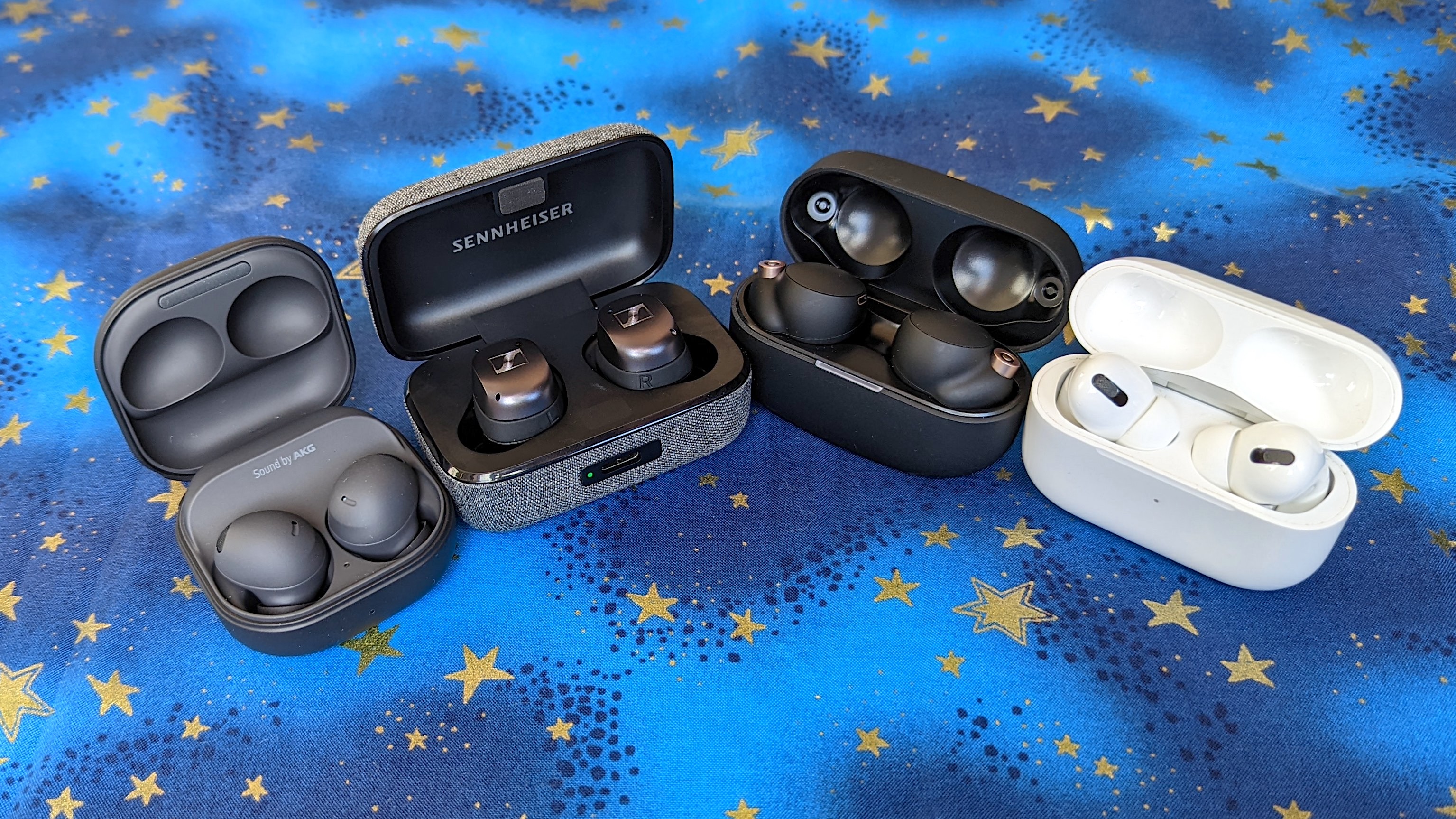
Apple closed the one gap that used to decide this category. Cancellation on the Pro 3 sits near enough to the Bose set that only a careful listener would separate them, and everything around it is better integrated than any rival manages. The tip selection matters more than the chip does: five sizes with foam included, which is why these work on ears that reject narrower ranges. A hearing test and a hearing aid mode now run on the buds themselves. The catch is platform. Pair them to an Android phone and the adaptive switching, the hearing features and the head tracking all fall away.
The verdict: The default recommendation, provided your phone has an apple on it.
#2 · Best Sound
Sennheiser Momentum True Wireless 4 Noise Cancelling Earbuds
Sennheiser builds these for people who care what music actually sounds like. The 7 mm TrueResponse driver has a coherence the Apple and Bose sets do not reach, particularly on acoustic recordings, and aptX Lossless carries enough data to justify the effort on a compatible Android phone. A full parametric equaliser sits in the app, which is unusual and welcome. It is also the problem, since most owners will never learn it and the default tuning is a little polite as a result. Cancellation trails the Bose set, so treat this as a listening choice rather than a commuting one.
The verdict: Choose these when the music matters more than the silence does.
#3 · Quietest Here
Bose QuietComfort Ultra Earbuds Second Generation Wireless
Nothing in an ear canal cancels low frequency noise like this. On a train the wheel roar does not soften, it goes, and CustomTune re-measures your ear at every power-on so the effect survives a clumsy reseat. Immersive Audio is the other reason people buy Bose, pushing the stage outward instead of piling on bass. You pay in runtime. Six hours a charge is the shortest figure on this page, and the Sony manages twice that for far less outlay while cancelling a tier below. If your commute is loud enough, the arithmetic still works.
The verdict: Buy for silence above all else, and carry the case everywhere.
#4 · Best For Android
Samsung Galaxy Buds 3 Pro Wireless Earbuds
Samsung has built the Android mirror image of the AirPods, and that comparison is fair in both directions. The two-way driver array genuinely separates treble detail from bass weight, real-time interpretation runs during a call, and the blade stems seat more reliably than the beans they replaced. Cancellation lands between the Apple and Sony sets. The lock-in is just as real as Apple's, though. Pair these to a Pixel or an iPhone and the hi-res codec, the interpretation and the seamless switching all disappear, leaving a decent but ordinary pair of buds.
The verdict: The obvious pick for a Galaxy phone, and only for one.
#5 · Best Value
Soundcore Liberty 4 NC Wireless Earbuds
Anker keeps making the mid-market look overpriced. Ten hours a charge is longer than any flagship here manages, LDAC is supported, and the adaptive cancellation lands closer to the Bose than the outlay has any right to. HearID builds a tuning profile from a short hearing check, and running it immediately is worth the two minutes, because the default is bass-heavy. One caveat on size. The shells are shallow but wide, so anyone who found the Apple set comfortable will be fine and anyone who did not should look further down.
The verdict: Most earbud per dollar here, and the value case is obvious.
#6 · Best Midrange
Sony WF-C710N Noise Cancelling Wireless Earbuds
Twelve hours on a charge is the number that puts this set on the list. That is double the Bose, and it changes how you use earbuds, because you stop thinking about the case at all. Sony's app is the most complete here, with a proper equaliser and multipoint across two devices, and the small shells fit ears that struggle with the Apple and Samsung sets. Two compromises are worth knowing. There is no LDAC, which is odd given whose buds these are, and cancellation sits clearly a tier below the Bose. Neither ruins the value.
The verdict: The sensible middle, and the set that never needs its case.
#7 · Best For Calls
Google Pixel Buds Pro 2 Wireless Earbuds
Call clarity is the reason these earn a place. Google runs the microphone processing on a dedicated Tensor chip, and the result is a voice that survives wind and traffic better than anything else here, the Apple set included. Silent Seal 2.0 measures your ear canal and tunes cancellation to it, which lifts a mid-tier system into competitive territory. Two caveats. Much of the cleverness assumes you actually use Gemini hands-free, and the twist stabiliser suits average ears rather than very small ones. On a Pixel it feels complete. Elsewhere it feels partial.
The verdict: Take these if you spend your working day on outdoor calls.
#8 · Best For Running
Beats Powerbeats Pro 2 Workout Earbuds
Ear hooks solve a problem no tip size can. If earbuds have ever launched out of your ear mid-run, these are the answer, because the nickel-titanium hook holds through sprints and burpees alike. Beats added real cancellation this generation, plus an optical heart rate sensor that reports into training apps. The trade-offs are physical ones. The case has to swallow those hooks, so it is enormous beside the Nothing set, and the tuning leans warm and bass-forward in a way that flatters running playlists while blurring quiet recordings.
The verdict: Unshakeable in a workout, and awkward almost everywhere else.
#9 · Best Budget
Nothing Ear A Hybrid Noise Cancelling Earbuds
Forty five decibels of hybrid cancellation at this level should not be possible, and the 11 mm driver behind it has genuine low end rather than the thin buzz budget sets usually produce. LDAC is supported too. The shells are small, which matters enormously, because the widest range of ear shapes will get a proper seal. So where does the money come off? The clear case scuffs and yellows, transparency mode sounds processed, and the call microphones give up in wind. As a spare or a first pair, none of that disqualifies it.
The verdict: Astonishing for the outlay, with corners cut where you look least.
#10 · Best Small Ears
EarFun Air Pro 4 Wireless Earbuds
Narrow ear canals rule out most of this list, and that is where EarFun wins. These are the smallest shells here by a clear margin, and they seat where the Bose and Samsung sets simply will not. The specification is faintly ridiculous for the outlay: fifty decibels of adaptive cancellation, both LDAC and aptX Lossless, eleven hours a charge, and an IPX5 rating. So what is missing? Polish. The app is slow and awkward, firmware arrives on no obvious schedule, and transparency mode is serviceable rather than good. The hardware is the bargain, not the software.
The verdict: The set to try when everything else falls out or hurts.
How We Researched and Scored These Wireless Earbuds
This ranking comes from published measurement data and editorial consensus rather than house listening sessions. We read the current group tests from five independent outlets, collected the specifications each manufacturer publishes, and re-checked every listing for stock, generation and a live offer before anything could rank. Twenty one sets entered the pool and ten survived.
- Fit range: how many tip sizes ship, how deep the shell sits, and therefore how many ear shapes can get a seal at all.
- Cancellation depth: reduction of steady low frequency noise, which is the only kind active circuitry genuinely addresses.
- Tonal balance: how the tuning holds up on acoustic material, judged against published frequency response curves.
- Battery per charge: the bud runtime with cancellation on, since the case total flatters sets that need topping up constantly.
- Call quality: microphone count, wind handling and whether processing survives a busy street.
- Codec reach: what the wireless path can carry on the phone platform the reader actually owns.
Fit carries the most weight at roughly thirty per cent, because a set that will not seal cancels nothing and sounds wrong. Cancellation and tonal balance take a quarter each, and battery, calls and codecs divide the rest.
No brand saw this list before it went live, and no placement was paid for.
What to Look For in Wireless Earbuds
Fit decides everything else, and it is the specification nobody publishes properly. A seal that breaks takes the bass and the cancellation with it, so the number of supplied tip sizes matters more than the driver diameter. Foam tips seal wider than silicone. Shallow shells suit narrow canals. If earbuds have ever hurt after an hour or dropped out on a run, buy for shell size first and treat the rest of the specification as secondary.
Battery figures need reading carefully. Manufacturers headline the combined bud and case total, which is what you charge from a wall rather than what you listen to. We look at the per-charge bud runtime with cancellation running, and that ranges from six hours at the premium end to twelve on the Sony. A short-runtime set is not worse, but the case lives in your pocket rather than a drawer.
Cancellation claims in decibels are close to meaningless across brands. A set quoting 45 dB and another quoting 50 dB are measured on different rigs at different frequencies, so read them as a rough tier. What does transfer is behaviour: whether the circuitry hisses, whether transparency sounds natural, and whether wind gets handled or amplified.
Codecs are the last decision, and mostly a smaller one than the forums suggest. An iPhone sends AAC no matter what the box claims, so LDAC and aptX Lossless on a set bound for an Apple household change nothing. Android owners with genuinely high resolution files will hear a difference on busy passages. Everyone else can ignore it. Budget tiers are honest here: entry-level sets now cancel well and feel cheap, the middle buys battery and app control, and premium money buys integration with the phone you already carry.
Who Needs Which Wireless Earbuds
iPhone owners should start and probably finish at the Apple AirPods Pro 3. The cancellation is now competitive with Bose, the hearing features are genuinely useful, and nothing else switches between an iPad and a Mac so cleanly. Galaxy owners have the mirror-image answer in the Samsung Galaxy Buds 3 Pro, and Pixel owners who live on calls should take the Google Pixel Buds Pro 2 instead.
Loud commutes point somewhere else entirely. The Bose QuietComfort Ultra Earbuds remove more low frequency noise than anything here, and if six hours a charge sounds tight, the Sony WF-C710N runs twice as long for far less while cancelling a tier below. Runners have exactly one sensible option, which is the Beats Powerbeats Pro 2 and its ear hooks.
Tight budgets are well served now. The Soundcore Liberty 4 NC is the value case that makes mid-market sets look silly, and the Nothing Ear A undercuts even that. Anyone with narrow ear canals, or a history of earbuds falling out, should try the EarFun Air Pro 4 before writing off the category.
Not sure? Buy whichever set your phone was designed alongside. That single decision does more for the experience than any specification on this page.
Test Results
| Product | Cancellation | Per-charge battery | Fit range | Codecs | Overall |
|---|---|---|---|---|---|
| Apple AirPods Pro 3 Noise Cancelling Wireless Earbuds | Near class leading | 6 hours | Five tips, foam | AAC, lossless | 94 |
| Sennheiser Momentum True Wireless 4 Noise Cancelling Earbuds | Good, natural | 7.5 hours | Silicone and foam | aptX Lossless | 92 |
| Bose QuietComfort Ultra Earbuds Second Generation Wireless | Deepest here | 6 hours | Three bands | aptX Adaptive | 93 |
| Samsung Galaxy Buds 3 Pro Wireless Earbuds | Adaptive, strong | 6 hours | Blade stems | Seamless hi-res | 89 |
| Soundcore Liberty 4 NC Wireless Earbuds | Strong for tier | 10 hours | Four tips | LDAC | 86 |
| Sony WF-C710N Noise Cancelling Wireless Earbuds | Solid | 12 hours | Four tips, small | SBC and AAC | 84 |
| Google Pixel Buds Pro 2 Wireless Earbuds | Ear-tuned | 8 hours | Twist stabiliser | AAC | 87 |
| Beats Powerbeats Pro 2 Workout Earbuds | Active, basic | 8 hours | Ear hooks | AAC | 85 |
| Nothing Ear A Hybrid Noise Cancelling Earbuds | 45 dB hybrid | 9.5 hours | Four tips, small | LDAC | 81 |
| EarFun Air Pro 4 Wireless Earbuds | 50 dB hybrid | 11 hours | Smallest here | LDAC, aptX | 79 |
Frequently Asked Questions
How long do wireless earbuds last before the batteries degrade?
Two to three years of daily use is realistic before runtime drops noticeably. The cells are tiny, they cycle every single day, and no manufacturer treats them as replaceable. Heat is the accelerant, so a case left on a car dashboard ages faster than one in a bag. Expect the buds to fail before the case does, since the case holds a far larger battery.
What is multipoint pairing and which earbuds have it?
Multipoint keeps a set connected to two devices at once, so a call on your phone interrupts audio from your laptop without any repairing. Most sets here support it, and the implementations differ enormously in how gracefully they hand over. Apple does something similar but only inside its own ecosystem, where switching is automatic rather than manual. Check the behaviour, not the bullet point.
Do LDAC and aptX Lossless make an audible difference?
Rarely, and only with the right chain. Both need a source phone that supports the codec and a file with more data than a compressed stream carries, which rules out most listening. On an iPhone neither applies at all, because it sends AAC regardless. Android owners playing genuinely high resolution files may hear a small gain in busy passages, mostly as better separation rather than more detail.
How do you stop earbuds falling out during exercise?
Ear hooks are the only reliable fix, which is why the Powerbeats sit on this list. Failing that, work through every supplied tip size before deciding, then try foam tips, which grip and seal better than silicone at the cost of some treble. Wing tips and stabiliser fins help moderately. A shell that is simply too large for your ear cannot be rescued by any tip.
Can you swim with wireless earbuds?
No, and the ratings are widely misread. IPX4 and IP54 cover sweat and rain, IP57 survives brief immersion, and none of that means a set will work underwater, because Bluetooth barely travels through water at all. Swimmers need a dedicated bone conduction set with onboard storage. Rinse any set with fresh water after heavy sweat and dry the mesh before charging.
Is active noise cancellation bad for your ears?
There is no evidence that it is, and a reasonable case that it helps. Cancellation adds no sound pressure, and it lets people listen several notches quieter because they are not competing with an engine. The pressure sensation some feel on first use is the brain reacting to missing low frequency energy, not physical force on the eardrum, and it fades within a week or so.
The Bottom Line
The Apple AirPods Pro 3 is the set we would buy first, because the cancellation finally matches the integration and the fit range is the widest here. Bose still wins outright on silence, and the Soundcore Liberty 4 NC remains the value argument that keeps the mid-market honest. Match the set to your phone first.As an Amazon Associate I earn from qualifying purchases. See our affiliate disclosure for details. Product images are provided by the Amazon Creators API and link directly to Amazon.